AI Financial Planning: Beat Inflation & Secure Your Future

Introduction
In an era of economic uncertainty, rising inflation, and volatile markets, the old rules of personal finance are being rewritten. That nest egg you’ve been carefully building? Inflation is silently chipping away at its value every single day. The static, once-a-year financial plan? It can quickly become obsolete in the face of rapid market shifts. It’s no wonder that achieving future financial security feels more challenging than ever.
But what if you had a brilliant, data-driven financial analyst working for you 24/7? One that could analyze millions of data points in seconds, personalize advice just for you, and help you navigate economic headwinds with confidence? This isn’t science fiction; it’s the reality of AI financial planning.
This guide will demystify the world of Personal finance AI and show you how this transformative technology can empower you. We’ll explore how AI tools for investors and everyday savers are creating powerful inflation financial strategies, automating wealth-building, and offering the kind of personalized financial advice AI that was once reserved for the ultra-wealthy. Get ready to learn how to harness the power of AI to not just protect your finances, but to actively grow them, beat inflation, and build a truly secure future.
The New Financial Reality: Why Traditional Methods Fall Short
For decades, the standard financial advice has been sound: create a budget, save a percentage of your income, and invest in a diversified portfolio for the long term. While the principles remain true, the tools and environment have drastically changed.
Traditional financial management often involves:
- Manual Budgeting: Tediously tracking every expense in a spreadsheet.
- Periodic Reviews: Meeting with a financial advisor once or twice a year to review a static plan.
- Emotional Decisions: Making impulsive investment choices based on market hype or fear.
- Generic Advice: Relying on one-size-fits-all rules of thumb that don’t account for your unique life circumstances.
In today’s fast-paced world, these methods have critical weaknesses. Inflation can spike unexpectedly, a new technology can disrupt an entire industry overnight, and personal goals can change in an instant. A static plan can’t keep up. It’s like trying to navigate a complex highway system using a paper map from five years ago. You need real-time data and dynamic adjustments to stay on course.

This is where AI wealth management steps in, shifting the paradigm from reactive check-ins to proactive, continuous optimization. It offers a level of smart money management AI that adapts as quickly as your life and the markets do.
What is AI Financial Planning? Your Digital Money Coach Explained
At its core, AI financial planning uses artificial intelligence, particularly machine learning and generative AI, to analyze your complete financial picture and help you make smarter decisions. Think of it as a super-powered digital financial advisor that combines the analytical prowess of a hedge fund with the personalized attention of a dedicated coach.
The technology behind it is complex, but its application is designed to be simple and user-friendly. Here’s what makes up the engine of financial wellness technology:
- Machine Learning Finance: Algorithms are trained on vast historical and real-time financial data. They learn to identify patterns, predict market trends, assess risk, and discover opportunities that a human analyst might miss.
- Automated Financial Planning: AI platforms can connect to all your financial accounts (checking, savings, credit cards, investments, loans) to create a holistic and dynamic financial plan. This plan isn’t set in stone; it evolves as your data changes.
- AI Financial Forecasting: By running thousands of simulations based on different economic scenarios, AI can project the future growth of your portfolio, estimate your retirement income, and stress-test your financial plan against potential downturns. This is crucial for recession proofing finances AI.
- Generative AI Finance: Newer platforms use conversational AI (similar to ChatGPT) to act as an AI money coach. You can ask complex questions in plain English, like “How would a 2% interest rate hike affect my mortgage payments and investment portfolio?” and receive an easy-to-understand, data-backed answer. Related: AI Tutors: Unlocking Student Potential with Adaptive Learning Paths
Mastering Your Cash Flow: AI Budgeting and Saving Tools
The foundation of any strong financial plan is understanding where your money is going. AI has transformed this tedious task into an insightful, automated process.
Beyond Spreadsheets: How AI Budgeting Tools Work
If you’ve ever abandoned a manual budget out of frustration, you’re not alone. AI budgeting tools and apps are designed to eliminate the friction and provide actionable insights.
Here’s how they work:
- Secure Connection: You securely link your bank accounts, credit cards, and other financial accounts to the app.
- Automatic Categorization: The AI instantly analyzes your transactions and automatically categorizes them—groceries, transportation, entertainment, utilities, etc. It learns from your corrections to become more accurate over time.
- Trend Analysis: The tool identifies your spending habits. It can show you that you spend 30% more on dining out in the summer or that your subscription costs have crept up by $50 over the last six months.
- Smart Alerts: The AI acts as a watchdog, notifying you of unusual spending, upcoming bills, or low bank balances to help you avoid overdraft fees.
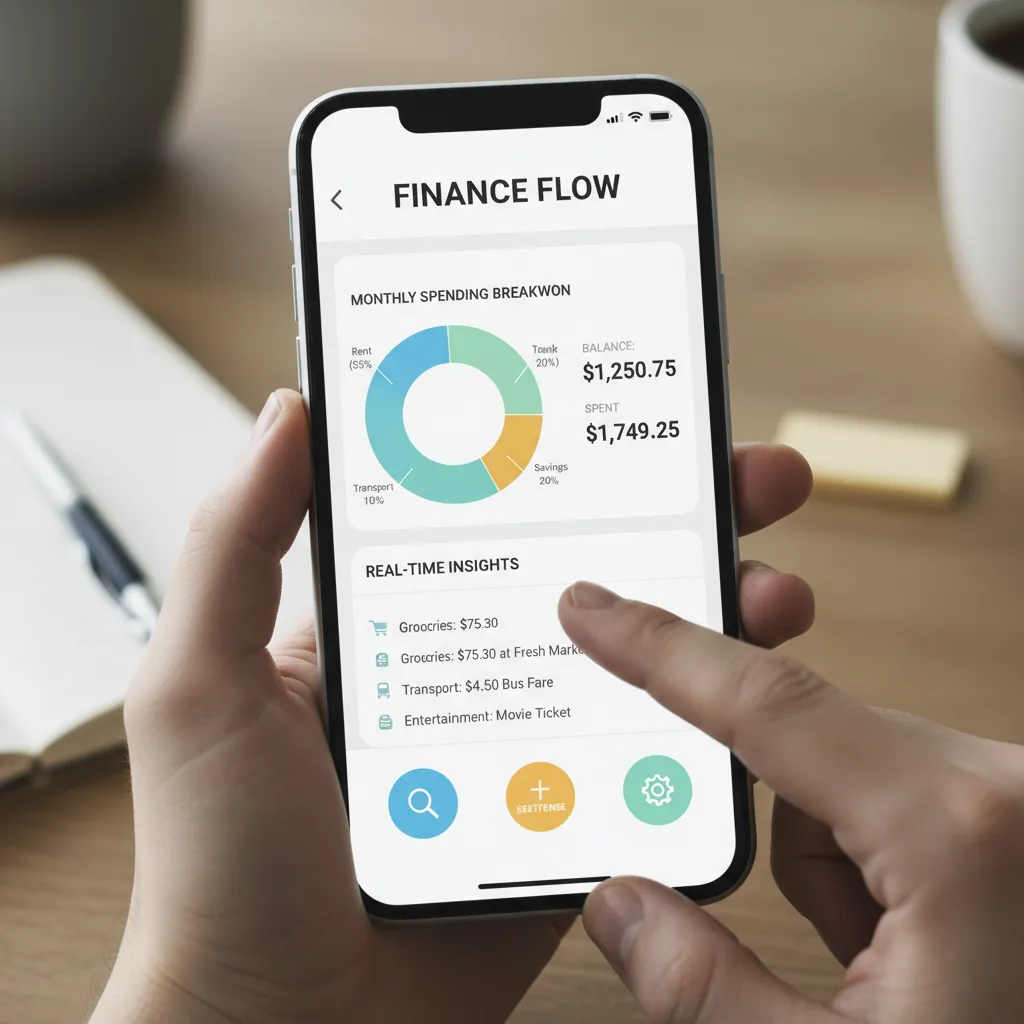
This level of detail in an AI personal budget gives you a crystal-clear picture of your financial health, allowing you to find opportunities for AI for saving money without the manual labor.
Your AI Money Coach: Getting Smart Financial Insights
The real power of these tools lies in the AI financial insights they deliver. They don’t just show you data; they interpret it for you. An AI money coach might send you a notification saying:
“You’ve spent $250 on ride-sharing this month, which is 40% above your average. If you reduce this by half for the rest of the year, you could save an extra $750 for your vacation fund.”
This proactive, personalized guidance helps you make small, impactful changes that lead to significant long-term gains. It’s a key part of what makes smart money management AI so effective. The reduction in financial stress alone can be a huge benefit. Related: AI Stress Relief: Top Mindfulness Apps & Techniques for Calm
Building Wealth in an Uncertain World: AI Investment Strategies
Budgeting and saving are about defense. Investing is about offense—actively growing your wealth to outpace inflation. AI investment strategies are democratizing access to sophisticated tools that help you build a resilient and profitable portfolio.
Robo-Advisors: Your Gateway to AI Investing
Robo-advisors are automated, algorithm-driven platforms that manage your investment portfolio. They are one of the most accessible forms of AI tools for investors.
How they work:
- You answer a questionnaire about your financial goals, risk tolerance, and investment timeline.
- The AI uses this information to build a diversified portfolio for you, typically using low-cost Exchange Traded Funds (ETFs).
- The platform automatically handles tasks like dividend reinvestment and portfolio rebalancing to keep you aligned with your goals.
When it comes to robo-advisors inflation performance, many are designed to adapt. They can be programmed to shift portfolios towards assets that historically perform well in inflationary environments, offering a degree of automated protection.
Inflation Hedging Strategies Powered by AI
Beating inflation is the central challenge for modern investors. You need your money to grow faster than costs are rising. AI provides a significant edge in developing effective inflation hedging strategies.
AI algorithms can analyze massive, unconventional datasets in real-time—from satellite imagery of shipping ports and credit card transactions to social media sentiment and corporate earnings calls. This allows them to:
- Identify Macro Trends: Spot early signs of inflation or economic shifts before they become mainstream news.
- Pinpoint Resilient Sectors: Identify industries and companies (like consumer staples or infrastructure) that have pricing power and can thrive during inflation.
- Optimize Asset Allocation: Recommend strategic investments in inflation-resistant assets like Treasury Inflation-Protected Securities (TIPS), commodities, real estate, and specific international stocks.
- Dynamic Rebalancing: Continuously adjust your portfolio based on evolving AI economic trends, rather than waiting for a quarterly review.

This data-driven approach moves beyond generic advice and helps you execute a smart investment planning strategy tailored to the current economic climate.
AI Risk Assessment: Making Smarter, Data-Driven Decisions
Every investment carries risk. The goal is to take smart risks. AI risk assessment finance tools use complex simulations to model how your portfolio might perform under various stressors, like a recession, a market crash, or a prolonged period of high inflation.
This helps you:
- Understand Your True Risk Exposure: See potential vulnerabilities in your portfolio you might have missed.
- Make Informed Decisions: Avoid emotional selling during a downturn because you have a clearer, data-backed understanding of the potential outcomes.
- Optimize for Risk-Adjusted Returns: Build a portfolio that maximizes potential growth for your chosen level of risk.
Protecting your investments is just as important as growing them. Advanced AI can also play a role in securing your accounts from bad actors. Related: AI Fraud Detection in Digital Payments
Planning for the Long Haul: AI and Your Future Financial Security
Your financial journey isn’t just about this year; it’s about securing your life for decades to come. AI is becoming an indispensable tool for long-term goals like retirement and wealth transfer.
AI Retirement Planning: Charting a Clear Path to Your Golden Years
Are you saving enough for retirement? It’s the most critical financial question for many, and AI provides clearer answers than ever before.
AI retirement planning platforms go far beyond simple calculators. They can:
- Aggregate All Your Assets: Pull in data from your 401(k), IRAs, brokerage accounts, and pensions to give you a single, unified view.
- Run Monte Carlo Simulations: This technique runs thousands of possible market scenarios to calculate the probability of you reaching your retirement goals.
- Model Different Scenarios: Instantly answer questions like, “What’s the impact of retiring two years earlier?” or “How much more do I need to save if I want to increase my retirement income by $1,000 a month?”
- Optimize Withdrawal Strategies: Once you’re retired, AI can help you determine the most tax-efficient way to draw down your assets to make them last.
This dynamic approach ensures your path to wealth growth AI is always optimized.
Generative AI Finance: Conversational Financial Planning
The future of financial advice is becoming more interactive and accessible thanks to generative AI finance. Imagine having a conversation with a digital financial advisor that has instant access to all your financial data and the wisdom of the entire financial market.

You could ask:
- “Explain the pros and cons of a Roth IRA conversion for me this year in simple terms.”
- “Based on my spending, create a realistic plan for me to save for a house down payment in the next three years.”
- “Show me how my portfolio would have performed during the 2008 financial crisis.”
Important Caveat: While powerful, general-purpose AIs like ChatGPT are not licensed financial advisors. They are excellent for education and exploring ideas, but for actual financial decisions, you should use specialized financial planning software AI or consult a human professional. The real power is in using these tools to become a more informed and confident investor.
Choosing the Right AI Tools: A Practical Guide
The market for AI financial planning tools is growing rapidly. How do you choose the right one for you?
Key Features to Look For
- Bank-Level Security: This is non-negotiable. Look for tools that use 256-bit encryption and two-factor authentication. Your financial data must be protected. Related: AI Guardians: The Future of Personal Safety with Smart Tech
- Holistic View: The best platforms connect to all your accounts to give you a complete financial picture, not just a siloed view of your budget or investments.
- Personalization and Customization: The tool should adapt to your goals and allow you to customize categories, alerts, and plans.
- User-Friendly Interface: The technology may be complex, but the user experience should be simple, intuitive, and provide clear, actionable insights.
- Transparent Fee Structure: Understand exactly what you’re paying for. Whether it’s a subscription fee or a percentage of assets under management, there should be no hidden costs.
AI vs. Human Advisors: A Hybrid Approach
Will AI replace human financial advisors? The most likely answer is no. The future of personal finance is a hybrid model where technology and human expertise work together.
- AI excels at: Data analysis, pattern recognition, automation, and calculation at a scale humans can’t match.
- Human advisors excel at: Empathy, understanding complex family dynamics, providing behavioral coaching, and helping you navigate major life events with nuance and wisdom.
The ultimate solution is using AI to handle the data-crunching and analysis, freeing you and your human advisor to focus on high-level strategy, goal-setting, and staying disciplined during market turmoil.
Conclusion
The days of passive, disconnected financial management are over. In a world of persistent inflation and rapid change, a proactive, intelligent, and personalized approach is essential for survival and success. AI financial planning is no longer a futuristic concept; it is a powerful and accessible set of tools available right now.
By embracing AI budgeting tools, you can master your cash flow. By leveraging AI investment strategies, you can build a resilient portfolio designed to outpace inflation. And by using AI retirement planning, you can chart a confident course toward future financial security.
The power to take control of your financial destiny has never been more in your hands. Start by exploring one of the many trusted AI finance apps, educate yourself on its features, and take the first step toward building a smarter, more secure financial future.
Explore More AI Insights on Our Blog
Frequently Asked Questions (FAQs)
Q1. What exactly is AI financial planning?
AI financial planning is the use of artificial intelligence, machine learning, and data analytics to provide personalized financial advice, automate budgeting and investing, and forecast future financial scenarios. It aggregates all your financial data to create a dynamic, holistic plan that adapts to market changes and your personal goals.
Q2. Can AI really help beat inflation?
Yes, AI can be a powerful tool in creating inflation financial strategies. It analyzes vast amounts of real-time data to identify inflation-resistant assets, such as certain commodities, real estate, and TIPS. AI-powered platforms can automatically rebalance portfolios to hedge against inflation more effectively than traditional, static methods.
Q3. Is it safe to let an AI manage my money?
Reputable AI financial planning platforms use bank-level security, including 256-bit encryption and multi-factor authentication, to protect your data and assets. While the AI makes algorithmic decisions, your money is typically held with a secure, third-party custodian. Always choose established platforms with a strong track record in security.
Q4. What is the difference between a robo-advisor and an AI financial planner?
A robo-advisor primarily focuses on automating investment management by building and maintaining a diversified portfolio for you. A comprehensive AI financial planner does that and more, offering a holistic view that includes budgeting, cash flow analysis, debt management, retirement forecasting, and goal setting.
Q5. Can I use AI for financial planning for free?
Many AI budgeting and savings apps offer free versions with robust features. Most robo-advisors and advanced financial planning platforms charge a fee, either as a flat monthly subscription or a small percentage of the assets they manage for you. These fees are often significantly lower than those of traditional human advisors.
Q6. Will AI replace human financial advisors?
It’s unlikely that AI will completely replace human advisors. The future is a hybrid model where AI handles the complex data analysis and automation, while human advisors provide empathy, behavioral coaching, and nuanced advice for complex life situations. AI empowers both the client and the advisor to make better decisions.
Q7. What are the main risks of using AI in finance?
The primary risks include data privacy and cybersecurity breaches, which is why choosing a secure platform is crucial. There’s also the risk of algorithmic bias if the AI is trained on flawed data, and over-reliance on technology without understanding the fundamentals. It’s important to use AI as a tool to enhance your own financial literacy, not replace it.