AI for Eco-Friendly Smart Homes: A Guide to Sustainable Living

Introduction
Imagine a home that doesn’t just respond to your commands, but anticipates your needs. A home that learns your family’s rhythm, optimizes its own energy use in real-time, and actively works to reduce your environmental impact—all while enhancing your comfort. This isn’t science fiction; it’s the reality of the modern AI smart home.
As concerns about climate change and rising utility costs grow, homeowners are increasingly looking for ways to live more sustainably. The convergence of artificial intelligence and home technology offers a powerful solution. We’ve moved beyond simple timers and voice commands; today’s eco-friendly home tech leverages sophisticated AI to create truly intelligent, self-sufficient living spaces.
This guide explores the transformative world of AI-driven eco-homes. We’ll delve into how AI home automation is redefining sustainable smart living, from slashing your energy bills and conserving precious resources to creating a healthier environment for your family. Get ready to discover how AI is making it easier than ever to build a home that’s not just smart, but wise.
The Dawn of the AI-Driven Eco-Home: Beyond Simple Automation
For years, the “smart home” was about convenience—automating lights with a clap or scheduling a coffee maker. While useful, this was merely automation, following rigid, pre-programmed rules. True intelligence was missing.
The revolution in smart home sustainability comes from adding a brain to the system: Artificial Intelligence. Here’s the key difference:
- Standard Automation: Follows “if-then” commands. If it’s 7 PM, then turn on the living room lights.
- AI Home Automation: Uses machine learning to understand context, learn patterns, and make predictive decisions. It knows you usually leave a room around 7:15 PM, notices the sun is still out, and decides to keep the lights off to save energy without you even asking.
This ability to learn and adapt is the cornerstone of green home AI. It transforms your house from a collection of connected gadgets into a dynamic, responsive ecosystem focused on efficiency and smart home resource management. This is the leap from a programmed house to a truly cognitive home.
Related: Edge AI Explained: How Local Intelligence is Transforming Our Smart World
Slashing Your Carbon Footprint: AI for Smart Energy Management
For most households, the biggest environmental impact—and the biggest utility bill—comes from energy consumption. This is where smart energy management AI delivers its most significant wins, creating truly energy efficient AI homes.
Intelligent Climate Control: The End of Wasted Energy
Your heating, ventilation, and air conditioning (HVAC) system is likely the single largest energy consumer in your home. Traditional thermostats are notoriously inefficient, heating or cooling an empty house for hours.
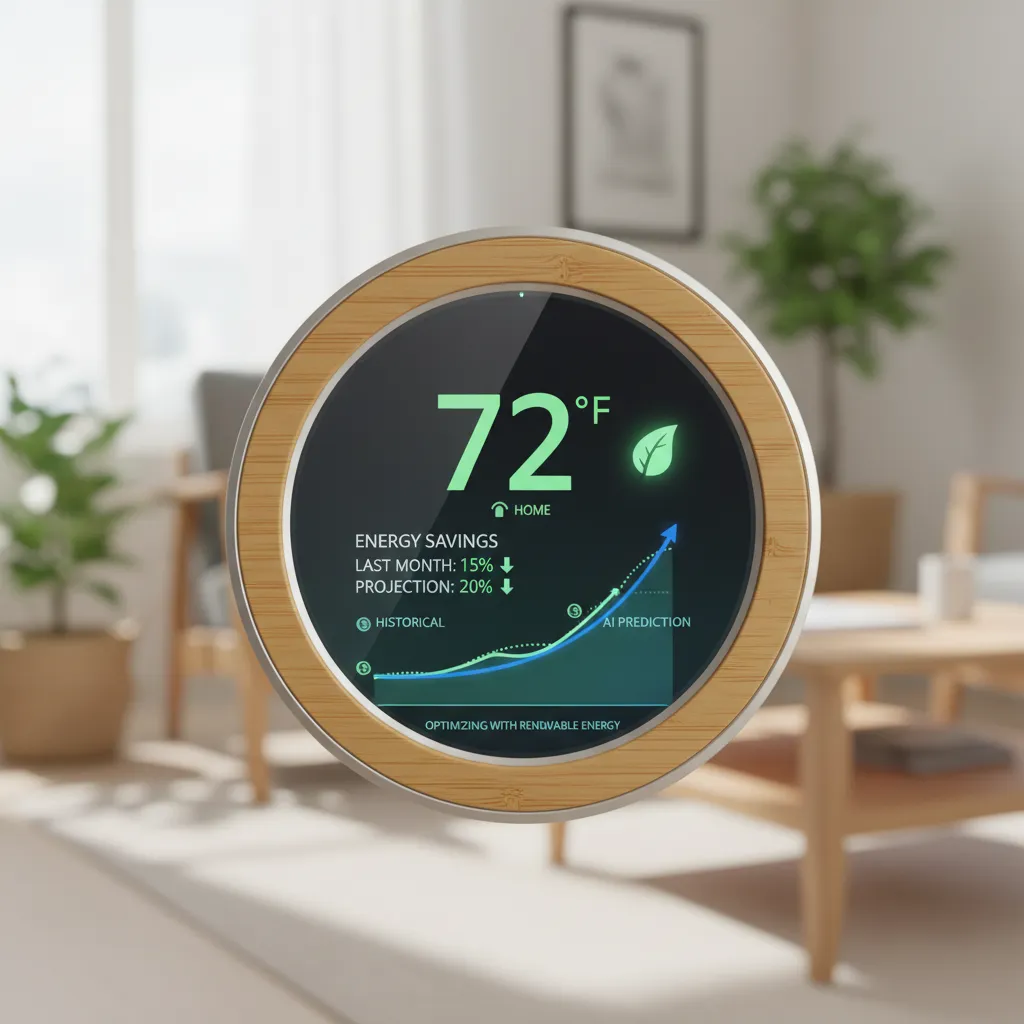
AI-powered smart thermostats, like those from Nest and Ecobee, are game-changers. Here’s how they work:
- Pattern Recognition: They learn your daily routines—when you wake up, when you leave for work, and when you return.
- Occupancy Sensing: Using motion sensors and smartphone geofencing, they know when the house is empty and automatically adjust to an energy-saving temperature.
- Predictive Analytics: The AI analyzes your preferences, local weather forecasts, and your home’s thermal properties. It might pre-cool your home before a heatwave hits, knowing it’s more efficient than fighting the peak afternoon sun.
This level of AI climate control home intelligence ensures perfect comfort when you’re present and maximum savings when you’re away, dramatically cutting down on wasted energy and lowering your bills.
Adaptive Lighting for Efficiency and Well-being
Smart lighting has evolved far beyond voice-activated dimmers. Modern AI green living solutions integrate lighting into the home’s central intelligence.
- Daylight Harvesting: Sensors detect the amount of natural light in a room, automatically dimming or brightening artificial lights to maintain a consistent level, saving electricity during the day.
- Presence Detection: Lights automatically turn off in unoccupied rooms, eliminating one of the most common sources of energy waste.
- Circadian Rhythm Support: AI can adjust the color temperature and intensity of your lights throughout the day—from cool, energizing light in the morning to warm, relaxing light in the evening. This not only saves energy but also contributes to AI for healthy homes by supporting natural sleep cycles.
Optimizing Renewable Energy with AI
For homes equipped with solar panels and battery storage, AI is the critical component that maximizes your investment in renewable energy smart homes.
An AI energy management system acts as a brilliant conductor for your home’s power. It processes thousands of data points to make optimal decisions:
- It checks the weather forecast to predict how much solar energy you’ll generate.
- It analyzes your past consumption to predict how much energy your family will need.
- It monitors utility grid pricing to know the cheapest and most expensive times to draw power.
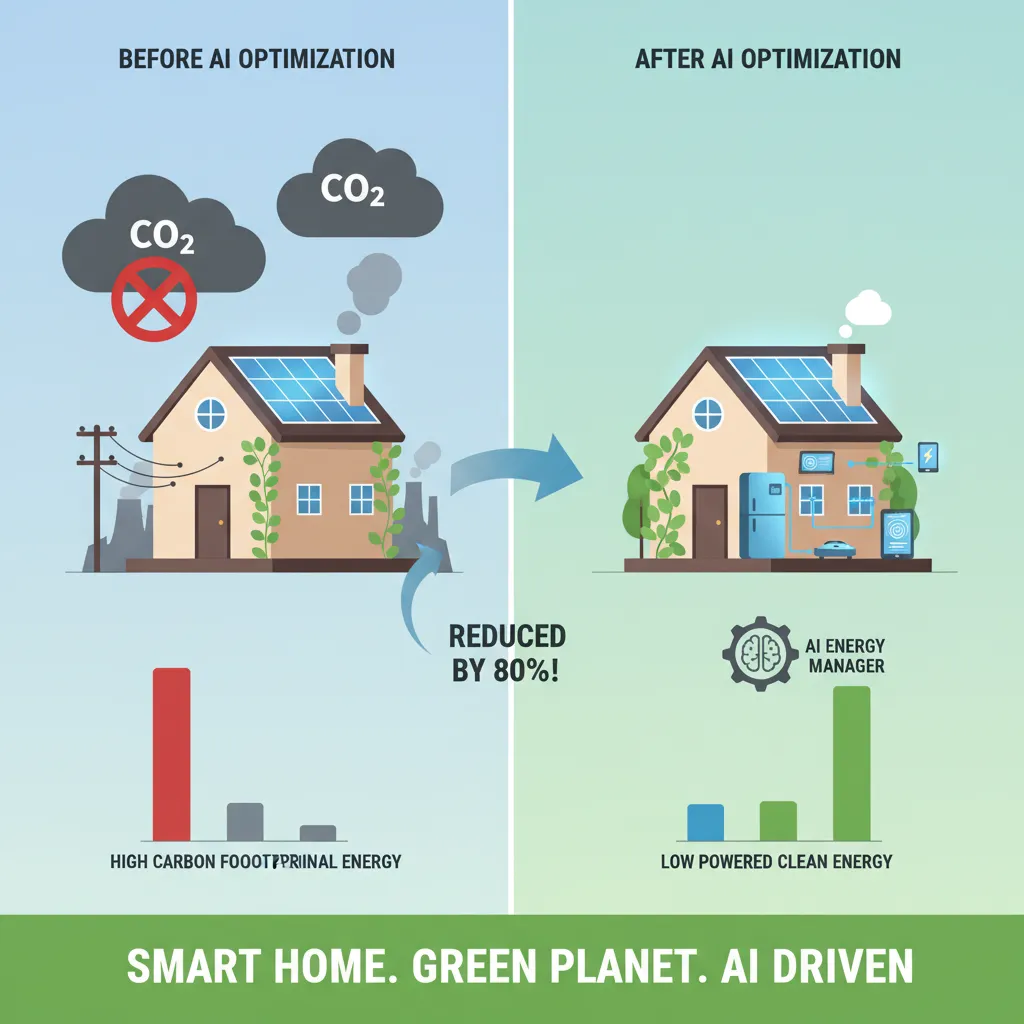
With this knowledge, the AI decides in real-time whether to use solar power immediately, store it in the battery for later, or sell it back to the grid. This intelligent dispatch ensures you use every last drop of clean energy, providing a massive boost to AI and home energy savings.
Unplugging Energy Vampires: Smart Plugs and Appliance Management
Many electronic devices consume power even when they’re turned off. This “phantom load” can account for up to 10% of your electricity bill. AI for reducing carbon footprint tackles this problem head-on.
Smart plugs equipped with AI can learn which devices are habitual offenders and automatically cut their power when not in use. Furthermore, an AI system can schedule energy-intensive appliances like your dishwasher, washing machine, or electric vehicle charger to run during off-peak hours when electricity is cheaper and often greener.
Beyond Energy: AI’s Role in Holistic Home Sustainability
A truly sustainable home looks beyond just kilowatt-hours. Sustainable home technology powered by AI addresses resource consumption from a holistic perspective, touching on water, waste, and even the food we eat.
AI-Powered Water Conservation: Every Drop Counts
Water scarcity is a growing global issue. AI water conservation home technology provides powerful tools to reduce waste.
- Smart Irrigation: Forget fixed watering schedules. AI-powered sprinkler systems analyze local weather data, evapotranspiration rates, and soil moisture sensors to deliver the precise amount of water your lawn and garden need, and no more. This can reduce outdoor water use by up to 50%.
- Intelligent Leak Detection: Tiny, undetected leaks can waste thousands of gallons of water per year. AI monitoring systems learn your home’s unique water flow “signature.” If they detect an anomaly—like a toilet that’s constantly running or a pinhole leak in a pipe—they can instantly alert you on your phone and even shut off the main water valve automatically to prevent catastrophic damage and waste.
Revolutionizing Waste Management, One Bin at a Time
AI is also entering the world of domestic waste management. While still an emerging area of eco-conscious living tech, the potential is enormous.
- Smart Bins: Companies are developing bins with built-in cameras and AI image recognition that can automatically identify and sort waste into the correct recycling or compost streams, reducing landfill contributions.
- Consumption Analytics: An integrated AI home platform can track your purchases and food consumption. By analyzing what you throw away, it can provide insights to help you plan meals better, suggest recipes to use up ingredients, and ultimately drive waste reduction AI smart home goals by minimizing food waste.
Related: Circular Living: How to Embrace Sustainable Consumption for a Better Future
Cultivating a Greener Lifestyle: AI in the Home Garden
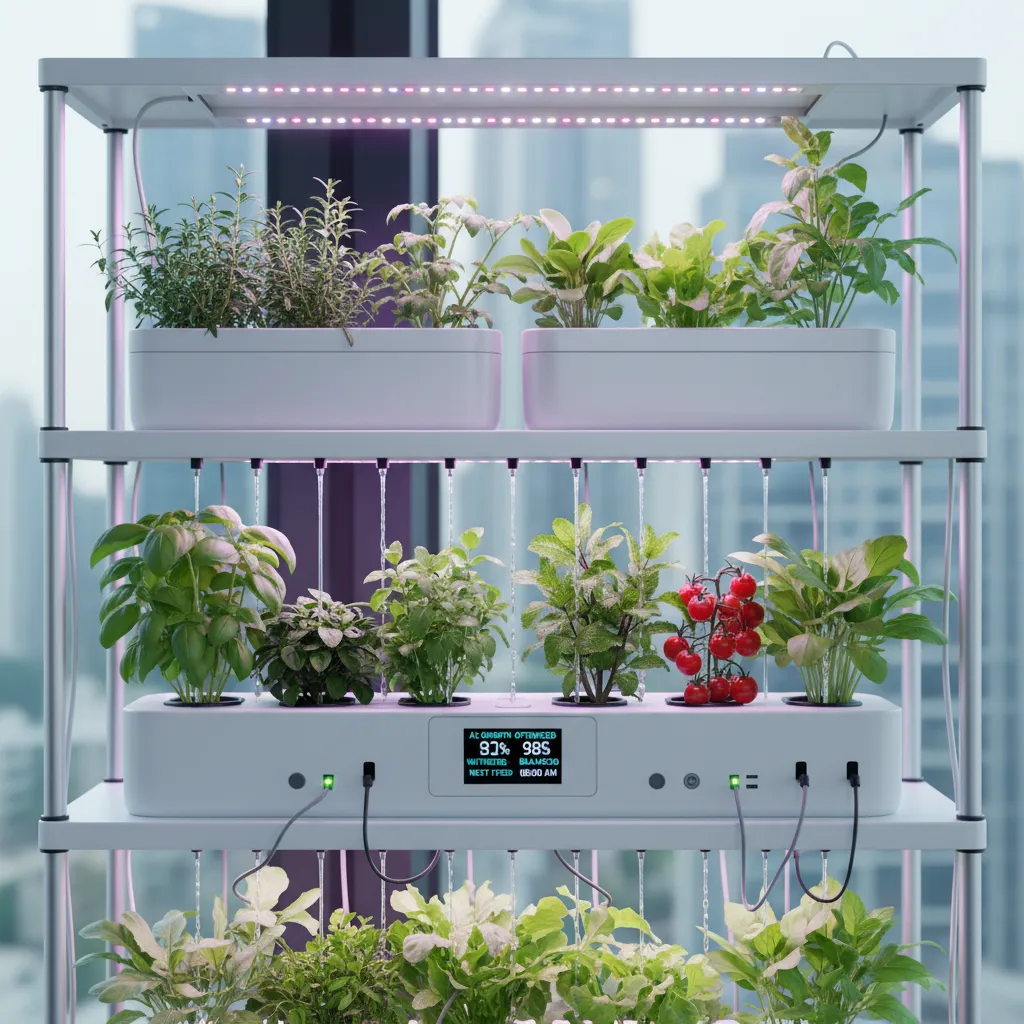
Reducing “food miles”—the distance food travels from farm to table—is a key part of sustainable living. AI-powered indoor gardening systems make it easier than ever to grow your own fresh produce at home. These high-tech units use AI to create the perfect micro-environment, optimizing the spectrum of LED light, watering schedules, and nutrient delivery for different plants. This allows you to grow herbs, leafy greens, and even tomatoes year-round with minimal effort and maximum efficiency.
The Human Element: Creating Healthy and Personalized Eco-Homes
The ultimate goal of an AI smart home isn’t just to be efficient; it’s to create a living space that is healthier, more comfortable, and perfectly attuned to its inhabitants. This is the essence of personalized eco-friendly living.
AI systems create a healthier indoor environment by continuously monitoring air quality. Sensors can detect pollutants like VOCs, CO2, and allergens. When levels rise, the AI can automatically activate air purifiers, increase ventilation, or alert you to open a window, ensuring your family is always breathing clean air.
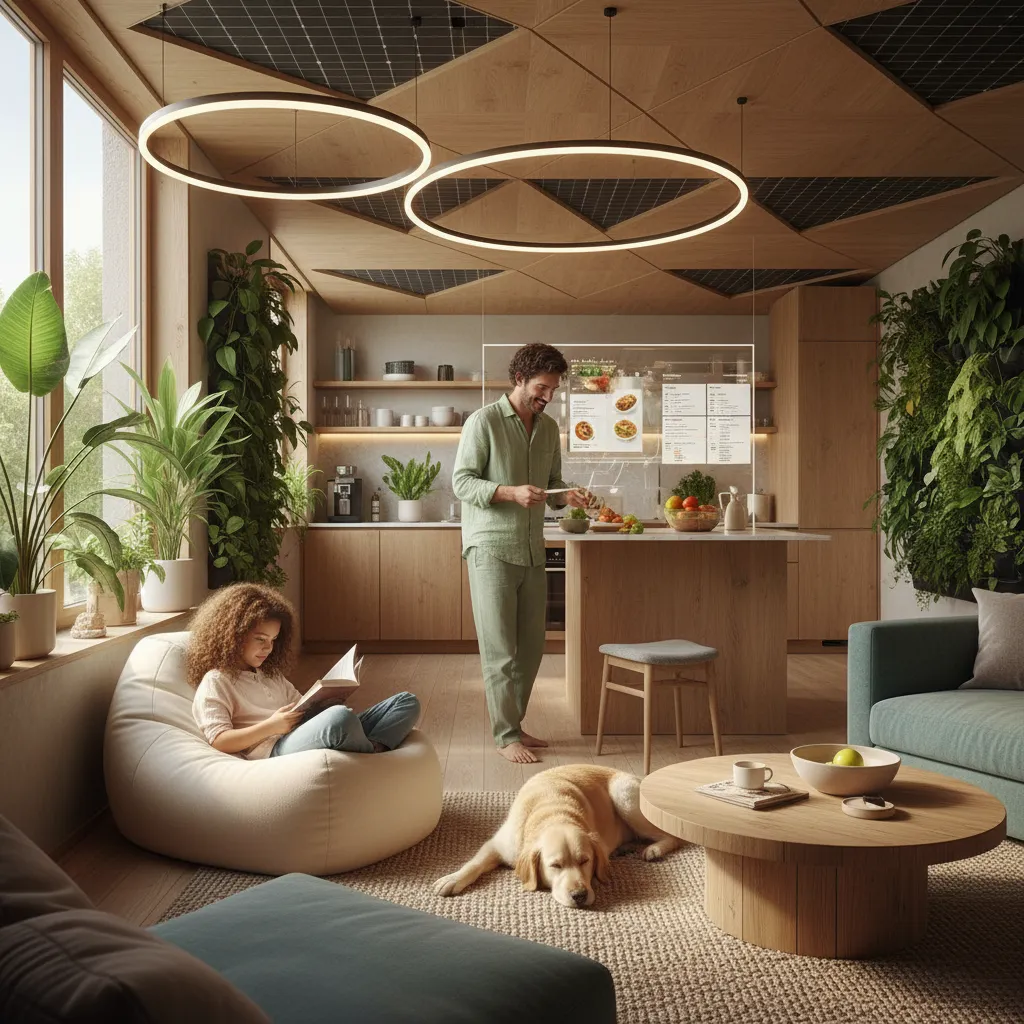
The true beauty of connected eco homes is their ability to balance sustainability with comfort. The AI learns that you like the bedroom a bit cooler at night but prefer a warmer living room for movie nights. It achieves this without wasting energy by focusing its efforts only where and when they’re needed. It creates a seamless, intuitive environment where sustainability doesn’t feel like a sacrifice; it feels like an upgrade.
Related: Deep Work Mastery: How to Unlock Your Focus and Boost Productivity in a Distracted World
The Future of Sustainable Homes: Trends and Challenges
The journey of the AI-driven eco-home is just beginning. Several exciting sustainable home tech trends are on the horizon.
- Hyper-Personalization: Future systems will go beyond learning schedules to understanding individual biometric data, adjusting the environment for optimal health and comfort for each person in the house.
- Predictive Maintenance: AI will monitor the performance of your appliances, predicting when a component might fail and scheduling maintenance before it breaks down, extending the lifespan of your devices and reducing waste.
- Eco-Smart Building Technology: AI and sustainable property technology will be integrated into the design and construction of new homes, with materials and systems chosen from the ground up for maximum efficiency and minimal environmental impact.
However, challenges remain. The initial cost of some eco-friendly smart home devices can be a barrier for many. Concerns about data privacy and security are also paramount, as these systems collect vast amounts of information about our daily lives. Finally, ensuring all these different devices from various manufacturers can speak the same language (interoperability) is crucial for a truly seamless experience.
Related: The Copilot+ PC Revolution: Are Snapdragon X Elite Laptops the Future of AI?
Conclusion
Artificial intelligence is fundamentally transforming our relationship with our homes. It’s empowering us to transition from passive consumers of resources to active managers of our own personal ecosystems. An AI smart home is more than a collection of gadgets; it’s a partner in our journey toward a more sustainable lifestyle.
By intelligently managing energy, conserving water, reducing waste, and fostering a healthy living environment, AI green living solutions offer a tangible, impactful way for individuals to combat climate change. The smart home environmental impact is no longer a question of “if,” but “how much”—and AI is the key to maximizing those positive effects.
The path to a fully automated, eco-conscious home is an incremental one. You can start today with a single smart thermostat or a few smart plugs. As you embrace this technology, you’ll discover that a home that is good for the planet is also a home that is better for your wallet and your well-being.
Frequently Asked Questions (FAQs)
Q1. How can AI make my home more eco-friendly?
AI makes homes more eco-friendly by learning your household’s behavior and making intelligent, automatic decisions to optimize resource use. This includes adjusting your thermostat to save energy when you’re away, optimizing lighting based on natural daylight, preventing water waste with smart irrigation and leak detection, and maximizing the use of renewable energy sources like solar power.
Q2. What are the main benefits of a sustainable smart home?
The primary benefits are a significant reduction in utility bills (electricity, water), a lower carbon footprint, and increased comfort and convenience. Additionally, these homes often provide a healthier living environment by managing air quality and can increase your property’s value.
Q3. Do smart homes really reduce energy consumption?
Yes, absolutely. Studies have shown that devices like AI-powered smart thermostats can reduce heating and cooling costs by 10-20% annually. By holistically managing lighting, appliances, and renewable energy, a fully integrated AI smart home can lead to even greater overall energy savings.
Q4. What is the difference between home automation and an AI smart home?
Standard home automation follows pre-set rules (e.g., “turn on lights at sunset”). An AI smart home uses machine learning to go beyond these rules. It learns your patterns, predicts your needs, and analyzes external data (like weather) to make autonomous decisions that maximize efficiency and comfort without direct commands.
Q5. Is eco-friendly smart home technology expensive?
While the upfront cost can be higher for some advanced systems, many entry-level devices like smart thermostats and smart plugs are quite affordable. These devices often pay for themselves over time through the energy savings they generate. It’s best to start small and expand your system as your budget allows.
Q6. How does AI help with water conservation at home?
AI contributes significantly to water conservation in two main ways. First, smart irrigation systems use AI to analyze weather and soil conditions, watering your garden only when necessary and preventing over-watering. Second, AI-powered leak detectors can identify anomalies in your water pipes and alert you to leaks instantly, preventing massive water waste.
Q7. What is the future of sustainable home technology?
The future lies in greater integration and hyper-personalization. Homes will become fully autonomous ecosystems that not only manage resources but also predict maintenance needs for appliances and tailor the environment to the health and well-being of each individual resident. This will be a core part of eco-smart building technology in new constructions.