AI Chatbots for Mental Health: Accessible Support in 2024

Introduction
In our hyper-connected, fast-paced world, the conversation around mental health has never been more critical. Yet, for millions, traditional therapy remains out of reach due to cost, stigma, or sheer lack of availability. It’s a daunting gap between needing help and getting it. But what if the device in your pocket could offer a first step, a listening ear, and a toolkit for wellness, available 24/7? This is the promise of AI mental health chatbots, a groundbreaking fusion of technology and psychology that is reshaping the landscape of mental wellness in 2024.
This isn’t about replacing human therapists. Instead, it’s about democratizing mental health with AI, providing accessible, immediate, and personalized support to those who might otherwise have none. These digital mental health tools are designed to help you manage stress, navigate anxiety, and build emotional resilience, one conversation at a time. In this deep dive, we’ll explore the world of AI-driven mental support, uncovering how these platforms work, their profound benefits, the critical ethical challenges they face, and what the future holds for this transformative technology.
The Silent Revolution: What Are AI Mental Health Chatbots?
At its core, an AI mental health chatbot is a sophisticated software program designed to simulate human-like conversation to provide emotional support and psychological guidance. Unlike general-purpose AI like ChatGPT, these are specialized mental wellness AI solutions built on established therapeutic principles.
They leverage advanced technologies to understand and respond to you:
- Natural Language Processing (NLP): This allows the AI to understand the nuances of your text or speech, interpreting intent, sentiment, and key themes in what you’re sharing.
- Machine Learning (ML): The chatbot learns from countless interactions to refine its responses, becoming a more effective and personalized mental health AI companion over time.
- Therapeutic Frameworks: Many of the best mental health chatbots are built on evidence-based techniques like Cognitive Behavioral Therapy (CBT), Dialectical Behavior Therapy (DBT), and Mindfulness. They don’t just chat; they guide you through structured exercises, help you reframe negative thoughts, and teach you coping mechanisms.
Think of it as a guided journal, a meditation coach, and a supportive confidant all rolled into one accessible app. These tools are designed to be a first line of defense, an entry point into understanding and managing your emotional well-being.

Why AI is Becoming a Go-To for Mental Wellness: The Key Benefits
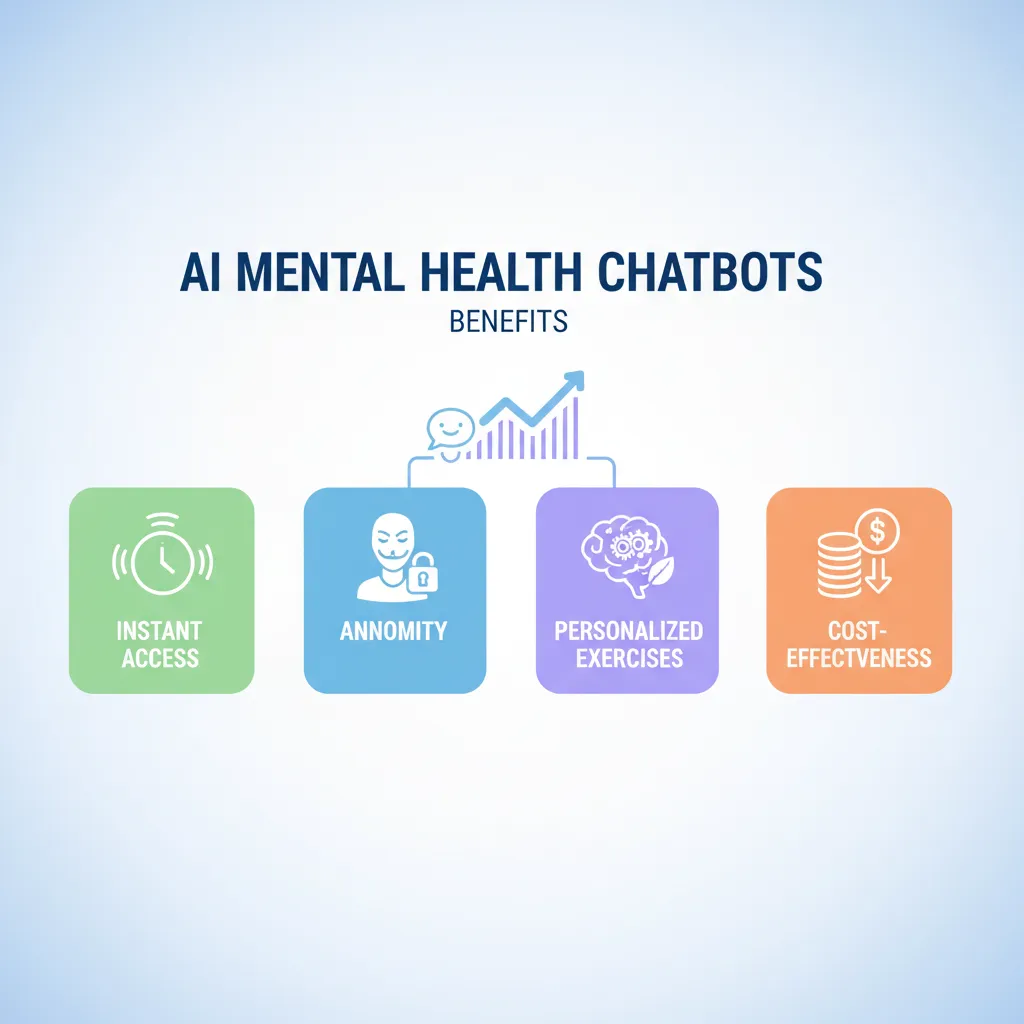
The rapid adoption of AI therapy apps isn’t just a trend; it’s a response to a deep, unmet need. These platforms offer a unique combination of features that dismantle the traditional barriers to mental healthcare.
Unprecedented Accessibility & Immediacy
The biggest advantage is arguably the access to instant mental health help. Anxiety doesn’t schedule appointments. A panic attack won’t wait for office hours. With an AI chatbot, support is available 24/7, wherever you are. This immediacy can be a lifeline during moments of acute stress or late-night worry, providing grounding techniques or a calming conversation right when you need it most.
Breaking Down Barriers: Affordability and Anonymity
Traditional therapy can be prohibitively expensive. Affordable mental health tech bridges this financial gap, with many apps offering free versions or low-cost subscriptions that are a fraction of the price of a single therapy session.
Furthermore, the fear of judgment or stigma prevents many from seeking help. AI offers anonymous mental health support. You can share your deepest fears and insecurities without revealing your identity, creating a safe space for vulnerability and honest reflection that can be a crucial first step. Related: The Rise of AI Agents: Your 2024 Guide to Automation
Personalized Support Tailored to You
One of the most powerful aspects of AI-driven mental support is its capacity for personalization. Through mood tracking, conversation analysis, and your direct feedback, these apps learn your unique emotional patterns. They can identify triggers, suggest relevant coping strategies, and tailor exercises to your specific needs. This creates a deeply personalized mental health AI experience that evolves with you on your wellness journey.
A Gateway to Self-Awareness
These self-care AI apps are powerful tools for introspection. They often include features like:
- Mood Journals: Helping you track your emotions and identify patterns over time.
- AI-Guided Meditation: Providing customized mindfulness sessions to calm your mind.
- Goal Setting: Assisting you in setting and achieving small, manageable mental wellness goals.
- AI for Stress Relief: Offering breathing exercises, grounding techniques, and immediate strategies to de-escalate stress.
By engaging with these tools, you’re not just getting support; you’re actively learning about yourself and building a toolkit of skills for long-term emotional resilience.
Traditional Therapy vs. AI Chatbots: A Modern Comparison
It’s vital to understand that AI therapy apps are not meant to replace human therapists, especially for complex conditions or crises. They are a different kind of tool, occupying a unique space in the mental health ecosystem. Let’s compare them. Related: Google’s AI Overviews: The New SEO Frontier is Here
| Feature | Traditional Therapy | AI Mental Health Chatbots |
|---|---|---|
| Accessibility | Requires appointments, often with long wait times. | 24/7, instant access from anywhere. |
| Cost | Can be very expensive, often hundreds of dollars per session. | Free or low-cost subscription models. |
| Human Connection | Deep, empathetic, nuanced human relationship. | Simulated empathy; lacks genuine human connection. |
| Anonymity | Confidential, but not anonymous. | Fully anonymous, reducing stigma. |
| Data Privacy | Governed by strict laws like HIPAA. | Varies by app; requires careful review of privacy policies. |
| Crisis Handling | Trained professionals can manage severe crises. | Limited; should always redirect to human crisis lines. |
| Primary Use | Diagnosis, deep-seated trauma, severe mental illness. | Daily support, skill-building, managing mild-to-moderate anxiety/stress. |
The most powerful approach is often a hybrid one. AI can be a fantastic supplement to traditional therapy, helping you practice skills and track your progress between sessions.

The Leading AI Companions of 2024: Top Apps to Know
The market for mental wellness AI solutions is booming. While we won’t endorse any single app, here are some of the most recognized players, categorized by their primary approach:
For CBT-Based Support & Skill Building
- Woebot: One of the pioneers in the field, Woebot is grounded in Cognitive Behavioral Therapy (CBT). It excels at helping users identify and challenge negative thought patterns through guided conversations and daily check-ins.
- Wysa: This AI penguin chatbot offers a friendly, empathetic ear combined with evidence-based techniques for managing stress, depression, and anxiety. It also offers the option to connect with a human coach.
For Mindfulness and Stress Relief
- Calm & Headspace: While primarily known as meditation apps, both platforms increasingly use AI to personalize recommendations for guided meditations, sleep stories, and mindfulness exercises based on your mood and goals. They are excellent examples of AI for stress relief. Related: The Future of Fitness: How AI is Personalizing Your Health Journey
For Comprehensive Emotional Wellness
- Youper: Positioned as an “emotional health assistant,” Youper uses AI to conduct conversational check-ins, understand your emotional landscape, and provide insights and exercises based on various psychological approaches.
- Replika: This app is one of the more advanced AI companion apps for mental health, creating a highly personalized AI friend that learns your personality and communication style. While less clinically focused, many users find it helpful for combating loneliness and practicing social skills.
Navigating the Ethical Maze: Challenges and Criticisms of AI Therapy
For all their benefits, the rise of AI psychological support brings a host of critical ethical questions. A responsible user must be aware of the challenges and limitations.
The Privacy Paradox: Who Owns Your Data?
This is perhaps the most significant concern. You are sharing your most intimate thoughts and feelings with an app. Where does that data go? How is it used? While some apps are striving for HIPAA-level compliance, not all are created equal. The privacy in AI therapy is paramount. Before using any app, you must read its privacy policy to understand if your data could be sold to advertisers or used for other purposes.
The Absence of True Empathy
An AI can be programmed to say empathetic things, but it cannot feel empathy. It doesn’t share your lived experience. This lack of genuine human connection means an AI can miss crucial subtleties in communication. It can’t read your body language or hear the hesitation in your voice. This is a fundamental limitation of chatbot psychology.
Risk of Misdiagnosis and Crisis Management
AI chatbots are not doctors or licensed therapists. They cannot diagnose conditions. A major challenge of AI therapy is ensuring user safety, especially in a crisis. A well-designed app will immediately detect keywords related to self-harm or severe crisis and provide clear, direct links to human-run crisis hotlines. Any app that fails to do this is a significant risk.
Algorithmic Bias and Equity
AI models are trained on data. If that data is not diverse and representative of all populations, the AI can develop biases that make it less effective for people of color, LGBTQ+ individuals, or other marginalized groups. Ensuring ethical AI mental health requires a constant commitment to fairness and inclusivity in its design and training.
The Future of Mental Healthcare is Hybrid: AI and Humans Working Together
The most exciting vision for the future of mental healthcare AI is not a world where robots replace therapists, but one where they work together. This is the “blended care” model.
Imagine a future where a therapist can assign a patient specific modules within an AI app to work on between sessions. The AI can help the patient practice CBT techniques, track their moods, and journal their thoughts. The therapist can then view this data (with patient consent) on a dashboard, gaining deeper insights into the patient’s daily struggles and progress. This allows for more effective, data-driven therapy sessions.
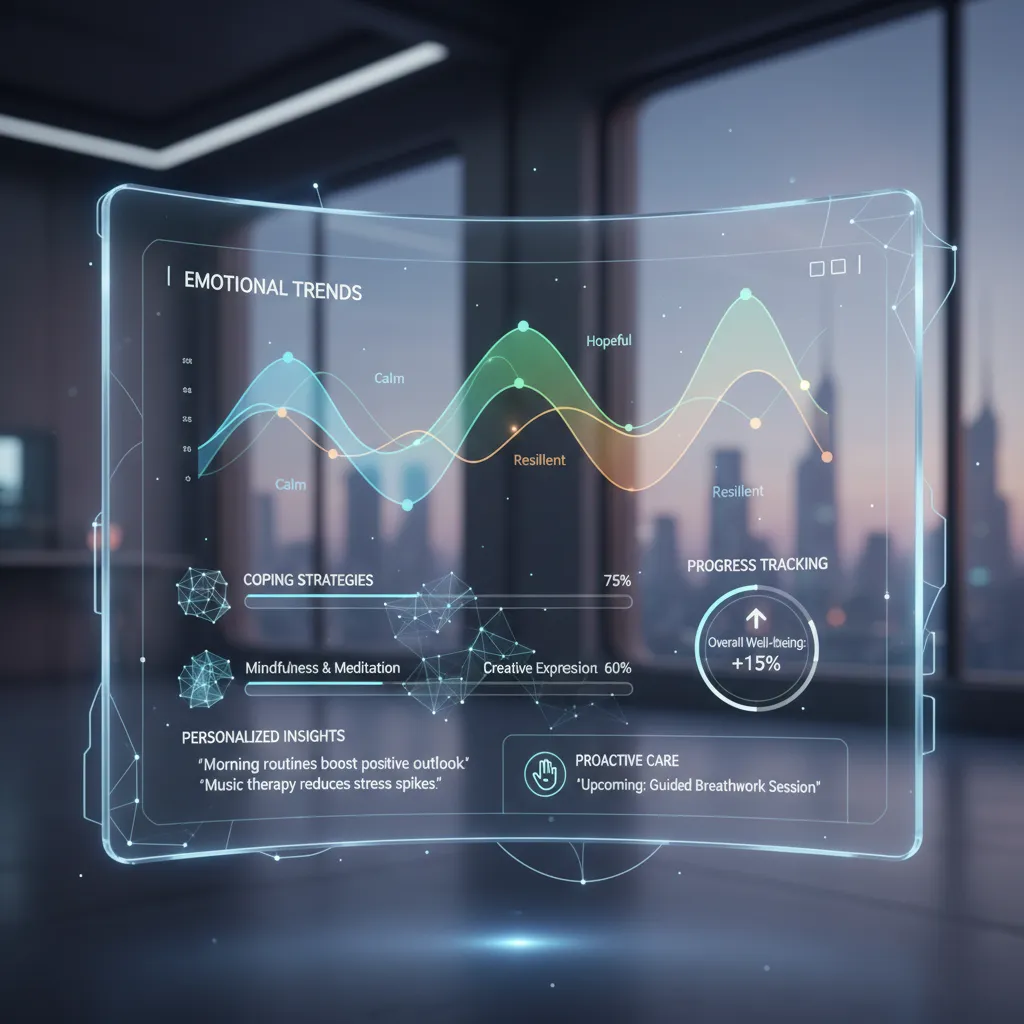
This integration of mental health innovation AI and human expertise could be revolutionary. It allows human therapists to operate at the top of their license, focusing on complex issues and deep emotional work, while the AI handles skill-building, data collection, and in-the-moment support. It’s a future where technology amplifies, rather than replaces, human connection. Related: The Neurotech Revolution: Unlocking the Future of Brain-Computer Interfaces
Conclusion
AI mental health chatbots are no longer a futuristic concept; they are a present-day reality offering a powerful new avenue for support. They represent a monumental step forward in making mental wellness tools more accessible, affordable, and destigmatized for millions. By providing instant mental health help and personalized AI support, these apps are empowering individuals to take an active role in their emotional well-being.
However, we must approach this technology with informed optimism. It is a powerful supplement, not a panacea. The importance of human connection, the critical need for data privacy, and the ethical responsibility of developers cannot be overstated.
The journey to mental wellness is deeply personal. Taking that first step is often the hardest part. Whether you explore one of these innovative AI therapy apps, open up to a friend, or seek professional help, know that your journey is valid. In 2024, support is available in more forms than ever before. Embrace the tools that feel right for you, and take that brave step towards a healthier, more resilient mind.
FAQs
Q1. Are AI mental health chatbots effective?
Yes, for many people, they can be highly effective. Studies have shown that chatbots built on principles like Cognitive Behavioral Therapy (CBT) can significantly reduce symptoms of mild-to-moderate depression and anxiety. They are most effective as a tool for building self-awareness, learning coping skills, and managing daily stressors, rather than as a replacement for human therapy for severe conditions.
Q2. Can an AI chatbot replace a human therapist?
No. AI chatbots should be viewed as a supplementary tool, not a replacement. They lack the genuine empathy, life experience, and nuanced understanding of a trained human therapist. They cannot diagnose conditions or manage severe mental health crises. The ideal future is a “blended care” model where AI supports the work of human professionals.
Q3. Is it safe to talk to an AI therapy app about my problems?
Safety depends on the app’s commitment to privacy in AI therapy. It’s crucial to read the privacy policy before using an app to understand how your data is stored, used, and protected. Look for apps that are transparent about their data practices and offer strong encryption. Remember that the conversations are with an algorithm, not a person bound by professional confidentiality laws like HIPAA.
Q4. What is the best AI chatbot for mental health?
The “best” chatbot depends entirely on your individual needs. Some, like Woebot, are excellent for structured CBT exercises. Others, like Wysa, offer a more empathetic and conversational approach. Apps like Calm use AI for guided meditation and stress relief. It’s recommended to try a few free versions to see which style and feature set resonates most with you.
Q5. How do AI chatbots help with anxiety and depression?
AI chatbots help by providing immediate, in-the-moment support. For anxiety, they can guide you through calming breathing exercises or grounding techniques. For depression, they often use CBT to help you identify, challenge, and reframe negative thought patterns. They also provide a non-judgmental space to journal your feelings and track your mood, which can increase self-awareness and help you identify triggers.
Q6. What are the main limitations of AI therapy?
The main limitations include a lack of genuine empathy and human connection, potential for data privacy issues, the risk of algorithmic bias, and an inability to handle severe mental health crises. They are a tool for support and skill-building, not a solution for complex trauma or severe psychiatric conditions.